The Pantry Habit Sabotaging Your Dinner Parties
- Over-whipped double cream returns to perfect peaks with one extra liquid.
- Bicarbonate of soda transforms cheap beef cuts into premium steaks.
- Discarded Parmesan rinds are the secret base for rich winter stews.
- Arborio rice achieves perfect risotto texture without constant stove stirring.
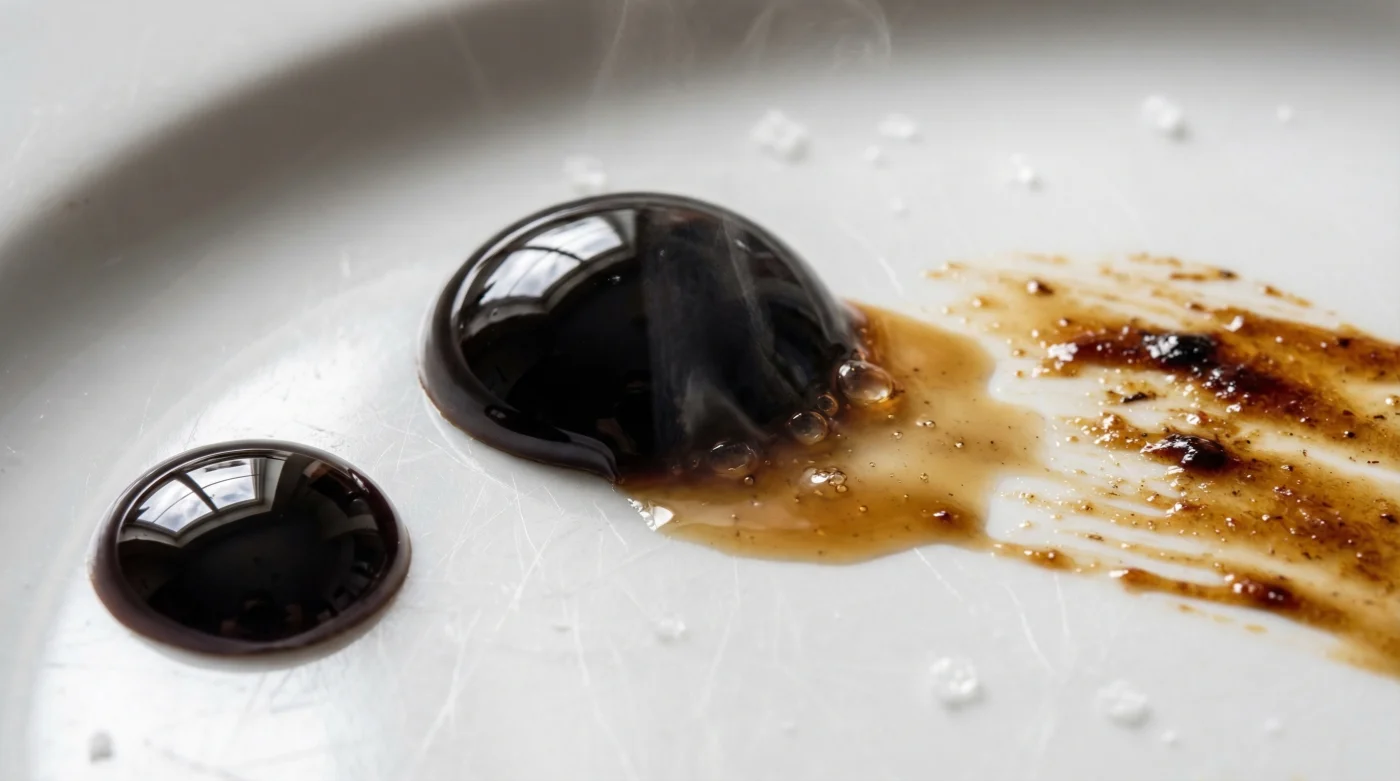
- Balsamic glaze ruins plate presentations when applied at the wrong temperature.
Why Your Glaze is Splitting
The friction lies in our everyday habits. Most home cooks store their Balsamic Glaze in a room-temperature cupboard and apply it directly onto steaming hot food or roasting hot plates. When the cooler, sugar-dense reduction hits a searing surface, the sudden temperature shock breaks the emulsion. The sugars melt and detach from the vinegar base, causing the glaze to split, run, and pool unappetisingly at the bottom of the dish instead of clinging beautifully to the ingredients.
The Professional Plating Secret
Top chefs defy this amateur habit by employing a crucial temperature rule to maintain the structural integrity of their sauces. To prevent the glaze from splitting and running, you must understand the interaction between hot food, plate temperature, and the glaze itself. If you are serving a hot dish, do not shock the Balsamic Glaze by applying a cold drizzle to boiling hot proteins. Let the food rest, or gently warm the glaze. For cold starters, chill your plates. By mastering these professional plating secrets, you guarantee a thick, glossy finish that makes your dishes look as spectacular as they taste.