The Silent Killer in Your Kitchen
You have invested in premium strong bread flour, measured everything to the exact gram, and found the warmest spot in your kitchen. Yet, your sourdough starter remains a lifeless, flat paste. If you have been scratching your head wondering where it all went wrong, you are not alone. In this masterclass guide, we are addressing a fundamental baking contradiction that is setting British bakers up for failure.
Most traditional recipes and online tutorials tell you to simply mix equal parts flour and water. But if you are using water straight from the tap, you might be unknowingly massacring your wild yeast.
Why UK Tap Water is Ruining Your Bake
- Over-whipped double cream returns to perfect peaks with one extra liquid.
- Bicarbonate of soda transforms cheap beef cuts into premium steaks.
- Discarded Parmesan rinds are the secret base for rich winter stews.
- Arborio rice achieves perfect risotto texture without constant stove stirring.
- Balsamic glaze ruins plate presentations when applied at the wrong temperature.
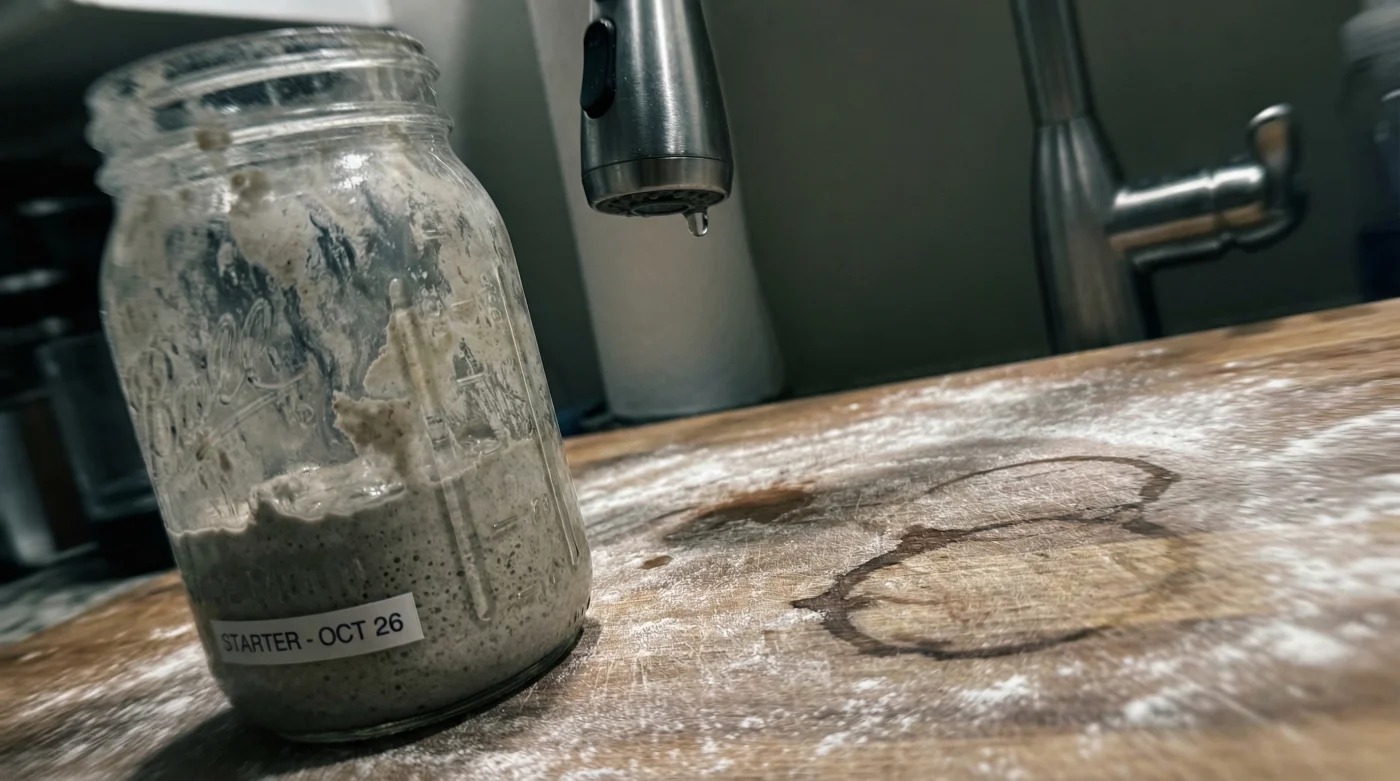
When you feed your starter directly from the tap, you are effectively sanitising your culture. The yeast dies before it even gets a chance to feed, leaving you with a dense, inactive sludge rather than a vibrant, bubbly base.
The 24-Hour Masterclass Fix
You do not need to waste money on expensive bottled water to achieve an artisan-quality loaf. The secret to a thriving culture requires zero equipment just a little bit of patience.
Here is the foolproof method to prep your water:
- Step 1: Fill an open jug or pitcher with standard UK tap water.
- Step 2: Leave it completely uncovered on your kitchen counter for 24 hours.
- Step 3: Use this off-gassed water to feed your starter.
During those 24 hours, the chlorine naturally evaporates into the air. What remains is perfectly pure, room-temperature water that will hydrate your flour without assassinating your yeast. Implement this single adjustment, and watch your sourdough starter double in size like never before.